Forestry Mulching in Harford County

Overgrown fields, choked fence lines and brushy hillsides ground into clean mulch in place — no burn piles, no dumpsters, topsoil untouched.

Call (443) 616-2889
By the hour or by the acre — free site walks
No Haul-Off Needed
Topsoil Preserved
Pasture & Trail Reclamation
Licensed & Insured

Reclaim Your Ground

Tell us how many acres have gotten away from you and what is growing there — we will tell you honestly whether mulching or conventional clearing fits. Call (443) 616-2889.

  • Mulch-in-place: no debris logistics
  • Honest mulching-vs-dozer advice
  • Per-acre and per-hour options
  • Farm, fence line and trail work welcome

One Machine, No Piles, No Burning

Forestry mulching solves the half of land clearing that nobody warns you about: the debris. A conventional clearing job in Harford County ends with push piles that have to be burned where allowed, buried in a pit, or loaded and hauled — and on many jobs the disposal costs more than the cutting. A forestry mulcher deletes that problem. The drum grinds standing brush, vines and small trees into a chip layer that stays on the ground as mulch: erosion control, moisture retention and weed suppression in one pass, with nothing to haul and nothing to burn.

For the farm and large-lot country north of Bel Air — Jarrettsville, Street, Whiteford, Darlington — it is usually the right tool for reclaiming pasture edges, opening fence lines, cutting trails through the back woods, and pushing back the multiflora rose and autumn olive that take a field in three wet summers.
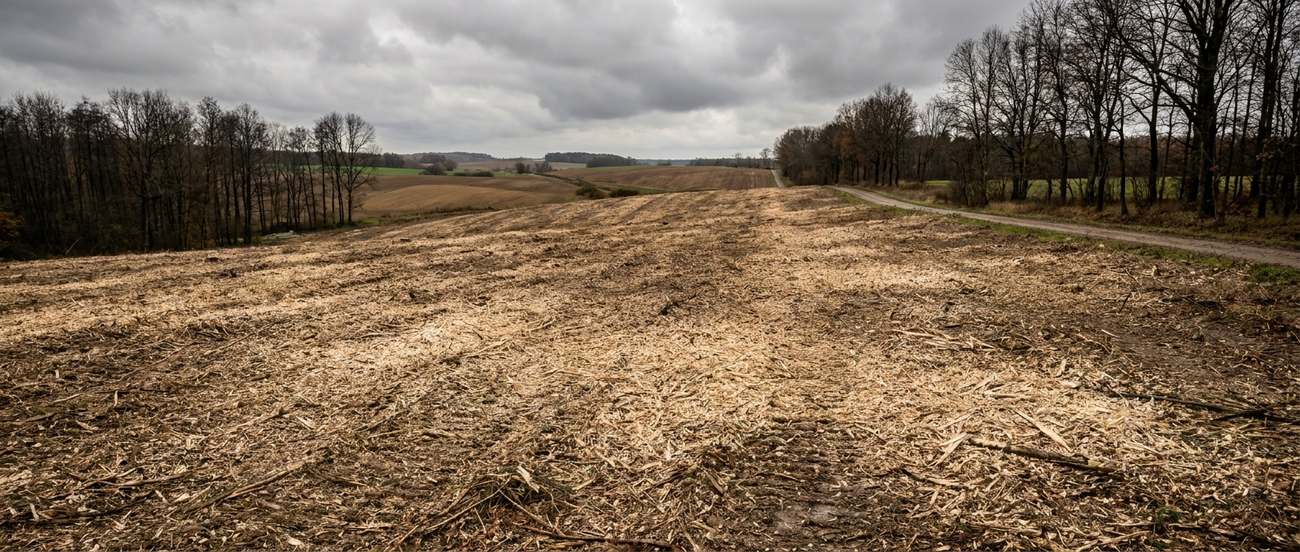
Where Mulching Beats the Dozer — and Where It Doesn't

Honest Expectations

Mulching is not magic. The chip layer takes about a year to break down where it lies thick. Regrowth from the root systems will test you the first season — a follow-up bush-hog or a grazing rotation keeps the ground won. And a machine that grinds a 6-inch sweetgum in seconds still slows down in mature hardwood, which is when conventional felling earns its keep. We will tell you which your land needs on the first walk — the machines do not care, and neither should the advice.

Take Your Fields Back

Call with the acreage and the state of the brush. Free estimates across northern Harford County's farm country and every lot south of it.

(443) 616-2889

Forestry Mulching Questions

What is the difference between forestry mulching and bulldozer clearing?

A dozer pushes vegetation over and out, roots, topsoil and all — fast, but it leaves push piles to deal with and takes the best soil with it. A forestry mulcher grinds standing brush and small trees into chips in place: no piles, no burning, no haul-off, and the topsoil stays where it belongs. Mulching wins on pasture reclamation, trails and views; dozer clearing wins when everything, roots included, must go because something is being built there.

Is forestry mulching worth it?

When the goal is open, usable ground rather than a construction pad — usually yes. One machine, one operator, no debris logistics, and the mulch layer suppresses regrowth and holds moisture while the ground recovers. Typical rates run by the hour or by the acre depending on density; on light-to-moderate brush a machine can open up an acre in a working day.

Can you build on land that was forestry mulched?

Not directly — and anyone who says otherwise is selling you a problem. Mulching grinds what is above ground; the stumps and roots stay in the soil. Under a pad, driveway or septic field those roots decay and the ground settles. If construction is the goal, the footprint needs to be cleared and grubbed; mulch the rest for looks and access.

How long until I can plant grass after mulching?

You can seed through a thin chip layer the same season — the mulch acts like a cover crop. A thick mat of chips takes a year or so to break down; raking or a light disc pass speeds it up. For pasture, most owners let it winter over, then seed in spring.

What size trees can a forestry mulcher handle?

Brush and saplings are its natural diet; most machines handle trees up to roughly 6–8 inches comfortably, and bigger with time and patience. Past that, felling and processing conventionally is faster and cheaper — a good operator mixes both on the same job.

Tap to Call — (443) 616-2889