Grading & Site Preparation in Bel Air

Building pads cut to spec, yards leveled and finish-graded, water moved away from the house — with Harford County's grading permits handled for you.

Call (443) 616-2889
Free site visits — honest cut-and-fill numbers
Building Pads
Yard Leveling
Finish Grading
Permits Handled

Get a Grading Quote That Holds

Slope, soil and access decide grading prices — so we look before we quote. What you get is a number that survives the job. Call (443) 616-2889.

  • Cut-and-fill priced from a site walk
  • County grading permit handled
  • Compaction in lifts on every pad
  • Drainage thought through, not bolted on

Grading & Site Preparation in Bel Air, Maryland

Bel Air Excavation provides grading and site preparation in Bel Air, Maryland and throughout Harford County. Building pad grading for new construction, yard leveling and regrading, finish grading, driveway grading, and full site preparation for homes, garages, additions and commercial buildings. Every grading job over 5,000 square feet of disturbance or 100 cubic yards carries a Harford County grading permit — we handle that paperwork as part of the grading quote, not as a surprise attached to it.

Site Preparation Grading for New Construction

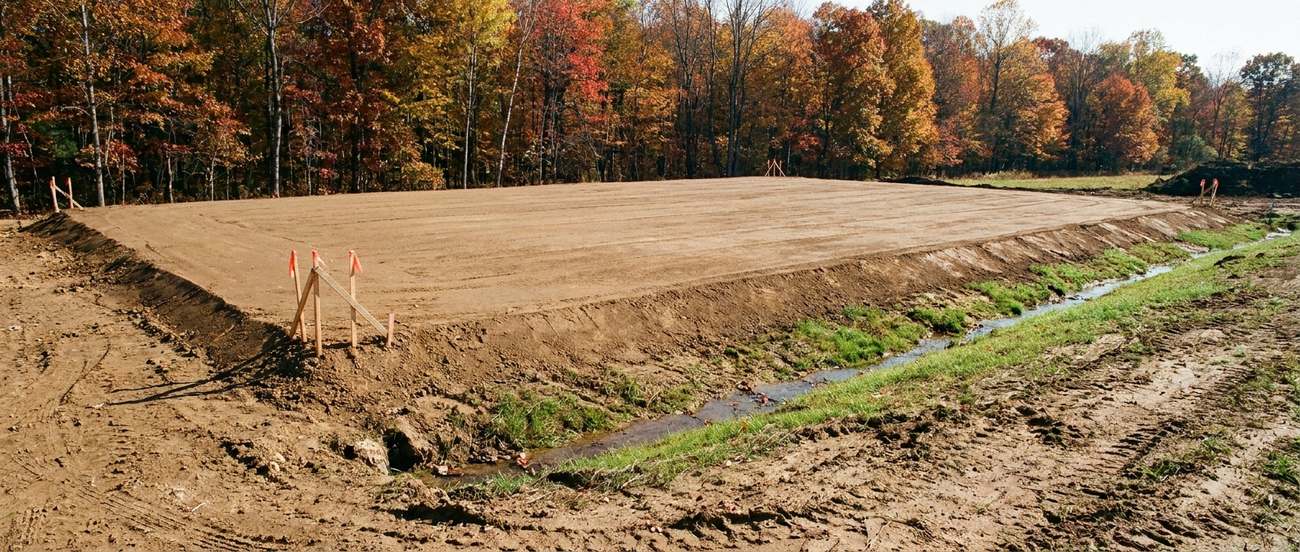
Harford County's own contractors describe a construction market with more work than crews — and site prep is where every one of those projects starts. Pad preparation here means stripping and stockpiling topsoil, cutting and filling to the builder's grades, and compacting fill in lifts so the slab, footers and frame land on ground that will not move. On the Piedmont side of the county that work runs into schist shallow enough to meet a bucket; on the Coastal Plain side it runs into sands that need containment and compaction discipline. Pricing the difference correctly is what a local grading contractor is for.

Yard Leveling and Regrading Around Bel Air

The county's big 1980s and 1990s subdivisions — Bel Air South, Abingdon, Forest Hill — are now 30 to 40 years into their settling, and it shows: back yards that pond, swales flattened by time, grades that tilt toward foundations they were built to protect. A regrade resets the geometry: positive slope away from the house, low spots feathered out, swales re-cut to carry water where it belongs.
The Grading Permit Question, Answered With Numbers

Harford County requires a grading permit when ground disturbance exceeds 5,000 square feet or 100 cubic yards. Below that, most residential regrades proceed permit-free. Above it, the county offers a standard erosion-and-sediment-control plan for jobs disturbing up to 30,000 square feet with cuts and fills under 10 feet and slopes no steeper than 3:1 — which covers most residential site prep without the cost of an engineered plan. Bigger than that, or steeper, and the job needs real E&S engineering. This paperwork is part of our quote, not a surprise attached to it.

Finish Grading: the Last Two Inches of Grading Matter Most

Rough grading moves the yards of dirt; finish grading decides whether the lawn drains, mows and looks right. Topsoil respread to even depth, surface tuned so water sheets away from structures, seedbed left ready — it is the least dramatic part of the job and the part you look at for the next twenty years. If a driveway or drainage work is in the plan, it happens in the same mobilization; machines on site are money already spent.

Get the Grade Right the First Time

Pads, leveling, drainage regrades and finish work — call for a free site visit anywhere in Harford County.

(443) 616-2889

Grading Questions

How much does it cost to level a yard?

Small residential regrades often land in the low thousands; full-yard leveling with imported fill and finish grading runs more. The published excavation range of $100–$250 per hour with typical projects at $1,700–$6,700 covers most Harford County yard work. The honest answer arrives with a site visit — slope, access, and where the extra dirt comes from or goes decide the number.

Do I need a permit to regrade my yard in Harford County?

Only above the county's threshold: a grading permit is required when disturbance exceeds 5,000 square feet or 100 cubic yards of earth. A typical drainage regrade around a house sits below it; leveling a whole large yard or cutting a new pad usually sits above. Jobs up to 30,000 square feet with cuts and fills under 10 feet can ride the county's standard erosion-and-sediment plan instead of an engineered one — faster and cheaper. We sort this before work starts.

Should I regrade or install a french drain?

Grade first, pipe second. If water stands because the lawn tilts toward the house or a low spot has no outlet, moving dirt fixes the cause — permanently, with nothing buried to clog. Drains earn their keep where grading cannot go: against foundations, between houses, under driveways. See yard drainage for the full triage.

What does a building pad cost to prepare?

Pad prep is priced by cut-and-fill volume, compaction spec and access — a garage pad on a flat Fallston lot is a day's work; a walk-out basement pad cut into a Piedmont hillside is not. Builders usually spec the pad; we price to the spec, with compaction in lifts so the slab never hears about it.

Can you fix a yard that slopes toward the house?

Yes — it is one of the most common calls in the county's 1980s–90s subdivisions, where two decades of settling around the foundation reversed the builder's grade. The fix is a positive-slope regrade away from the wall, usually with downspout tie-ins while the machine is there. It is cheaper than the basement waterproofing it prevents.

Tap to Call — (443) 616-2889