Septic System Cost Ranges, Straight
| System / component | Typical range | Notes |
|---|---|---|
| Conventional gravity septic system, installed | $3,600–$12,500 | Soil, size and access set position in range |
| BAT nitrogen-removal septic unit (where required) | Adds thousands over conventional | Required in the Critical Area; grant-offset below |
| Perc test application (county) | Modest county fee | Septic perc witnessed by Harford County Health Dept |
| Septic drainfield replacement alone | Varies with soil & size | Often the failing component on aging septic systems |
Treat every septic figure as orientation, not a quote — in septic work the soil owns the septic estimate, and no two perc results price alike.
The Septic Map Question Worth Thousands: the Critical Area
Maryland requires Best Available Technology (BAT) nitrogen removal on new and replacement systems inside the Chesapeake Bay Critical Area — the 1,000 feet nearest tidal waters (COMAR 26.04.02). In Harford County that band hugs the southern shore: parts of Edgewood, Joppatowne, Aberdeen and Havre de Grace. Everywhere else — Bel Air, Fallston, Forest Hill, the entire northern county — conventional systems remain legal; Harford repealed its broader county-wide BAT mandate in 2017. Two identical houses, four miles apart, can face septic system bills thousands of dollars different on this one map line. Ask it first.
The Septic Grant You Already Paid Into
Every Maryland septic system household pays the Bay Restoration fee — and the resulting Bay Restoration Fund pays it back to homeowners who upgrade to nitrogen-removing systems. Under MDE's FY2026 guidance the grant is income-scaled (a percentage of the BAT cost, less a $1,200 homeowner share), administered through the county, and prioritized toward failing systems in the Critical Area. The order of operations matters: eligibility and application come before the contract. It is the most commonly missed money in Maryland septic work.
The Harford County Septic Process, Priced Step by Step
- Septic perc application and witnessed test through the Health Department's Bureau of Environmental Health — the county's own soil table decides whether your series tests anytime (the Glenelg loams around Bel Air do) or waits for the wet season.
- Septic design and permit sized to the house and the soil's tested capacity.
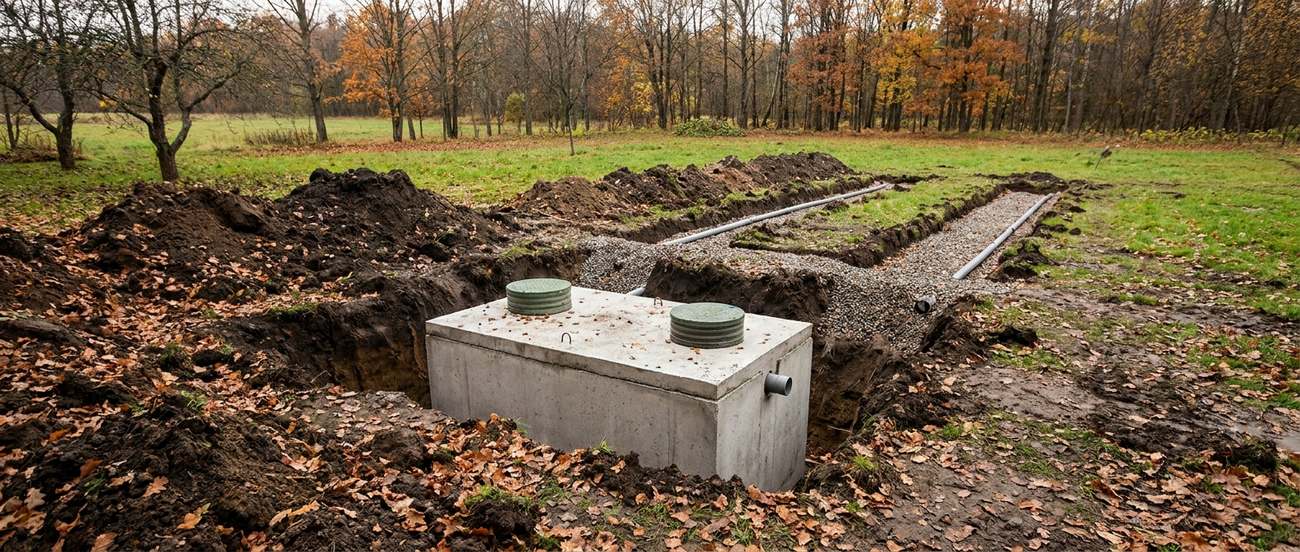
- Septic installation and inspections — tank, distribution, drainfield, backfill in lifts, county eyes on the open hole.
- The excavation variables — access, spoil handling, and on the Piedmont side, the rock possibility, priced in the quote rather than discovered in an invoice.
When the ranges have done their orienting, a call to (443) 616-2889 turns them into a septic number for your parcel — Critical Area status, grant path and perc plan included.